The Broad Ripple Dishwasher Job That Started With a Squeak
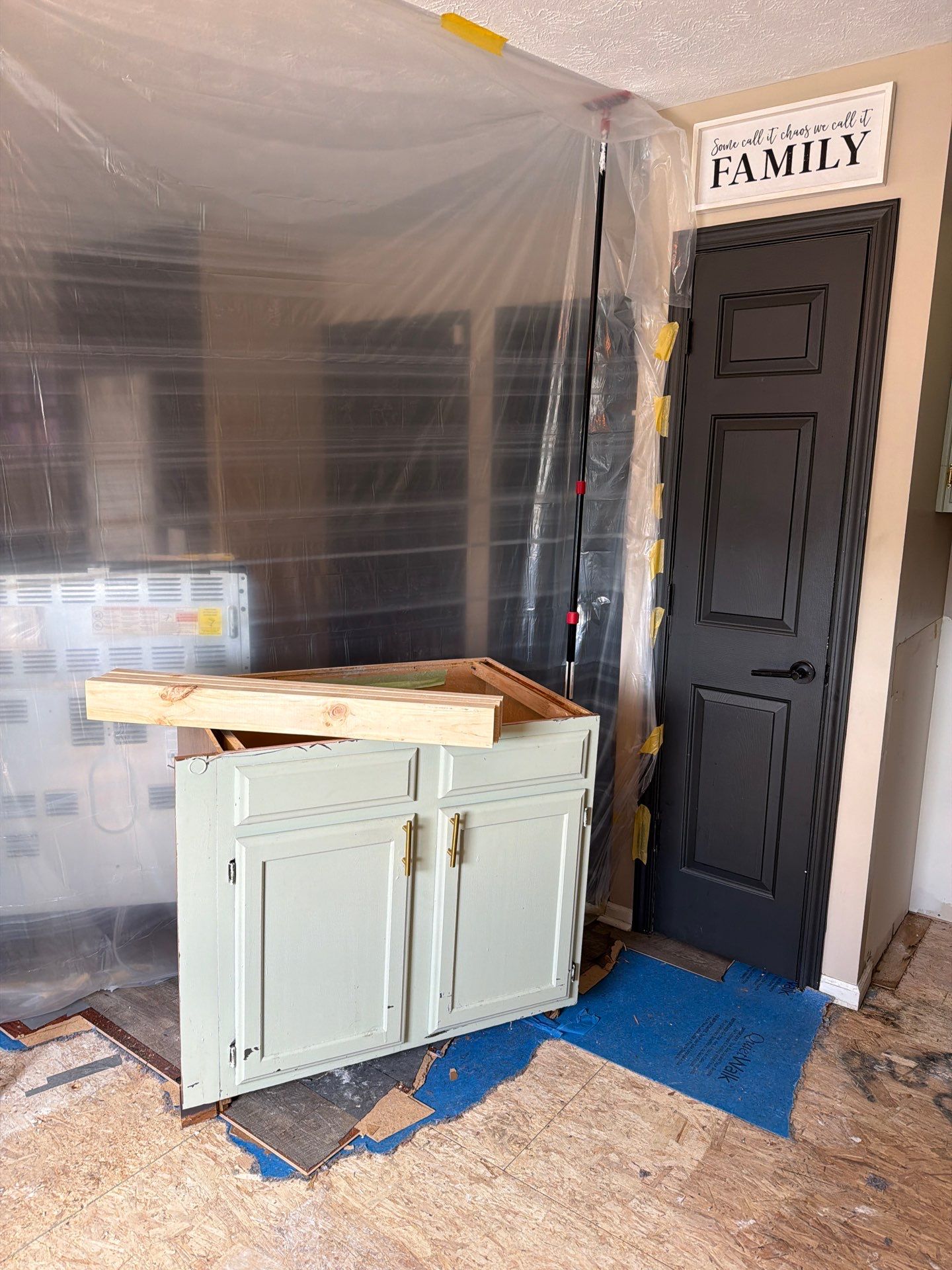
Back to that Tuesday call. The homeowner in Broad Ripple had noticed a faint squeak near her dishwasher in late September. By mid-October, the floor flexed under her weight. Our technician pulled the toe-kick, slid a borescope into the cavity, and found the supply line had been weeping at the compression fitting for at least a month. The visible puddle had been small. The hidden migration under the cabinet base was not. We documented 42 square feet of saturated OSB subfloor, two wet stud bays, and Category 2 contamination from food residue that had seeped down with the water. Total mitigation, including controlled demolition of the toe-kick area, antimicrobial treatment, and four days of structural drying with two dehumidifiers and three air movers, came in at $3,840. The insurance carrier covered it under sudden and accidental discharge. The takeaway for any Lapel homeowner: a slow appliance leak rarely stays small, and the longer it migrates, the more of your subfloor has to come out.
A Carmel Bathroom Where the Tile Lied
Another Lapel area call came from a Carmel couple whose master bathroom tile looked perfect. No cracks, no discoloration, no obvious failure. The wife had developed a persistent cough, and a mold inspector found elevated spore counts under the vanity. When we arrived, our thermal imaging camera showed a cold signature running from the toilet flange across roughly six feet of subfloor. The wax ring had failed quietly, probably two years prior based on the staining pattern we found after demo. The tile and thinset had held up beautifully. The plywood beneath had rotted into something you could push a screwdriver through. This is why we use a combination of hidden leak detection tools rather than just relying on what you can see. Moisture meters, infrared cameras, and in some cases hygrometers reading subfloor cavity humidity all tell a piece of the story. That Carmel job ended up costing $8,900 because the rot had reached one joist and required sistering with new lumber before we could rebuild the floor system.
The Fishers Crawl Space Call
A Fishers homeowner called us in February after his utility bill spiked and his living room floor felt cold and slightly bouncy near the exterior wall. He suspected a heating issue. The actual problem was a frozen and burst supply line in the crawl space that had been spraying intermittently every time the system pressurized. The crawl space dirt had absorbed most of the water, but the floor joists and subfloor sheathing above had soaked it up like a sponge. We coordinated the plumbing repair, then handled the crawl space water damage removal and drying over six days. Subfloor sheathing in a 90 square foot section had to be cut out and replaced because moisture readings refused to drop below 24 percent even after aggressive drying. Total job, including framing reinforcement on one joist that had started to sag, ran $6,200.
What Subfloor Repair Actually Costs in Lapel
Costs vary by access, contamination category, and how much wood has to come out. From hundreds of Lapel jobs, here is what we typically see. A small isolated section, maybe 10 to 20 square feet of clean Category 1 water damage caught early, often runs $1,500 to $2,800 for mitigation only. A medium kitchen or bathroom job with 40 to 80 square feet of saturated subfloor, partial cabinet removal, and Category 2 water lands between $3,500 and $7,500. Large jobs involving structural joist repair, mold remediation, or Category 3 contamination from a sewage source can exceed $12,000 quickly. If your damage stems from a sewer backup, the protocol changes entirely and we route it through our sewage cleanup process because the contamination requires different containment and disposal.
How We Actually Detect Subfloor Damage
Detection is not guesswork. On every Lapel subfloor inspection, our IICRC technicians run the same sequence:
- Visual mapping of stains, cupping, crowning, or soft spots
- Pin and pinless moisture meter readings across the affected area and three feet beyond
- Thermal imaging to find cold zones that indicate active moisture
- Borescope inspection of joist bays when access is limited
- Cavity humidity readings if drywall or cabinetry blocks direct access
Healthy plywood reads under 14 percent moisture content. OSB reads under 12 percent. Anything above 20 percent is actively wet and will degrade fast. Above 28 percent, the wood fibers are usually past the point of structural recovery, and we are talking replacement instead of drying.
The Zionsville Call We Turned Away
Not every call becomes a job, and that matters. A Zionsville homeowner phoned us about a small refrigerator water line leak. By the time he called, he had already pulled the fridge, mopped up the water, and run a box fan for two days. We had him take moisture readings using a meter he borrowed from a neighbor. Readings came back at 13 percent on the laminate and 15 percent on the subfloor edge he could access. We told him to keep the fan running another 48 hours, recheck, and call back only if the numbers climbed. They did not. He saved roughly $2,000 by not hiring anyone, and we earned a referral instead. If we cannot help, we will tell you directly. That honesty is part of how Lapel Water Restoration builds trust one floor at a time across Lapel.
Why Material Type Changes the Repair Path
One detail that surprises Lapel homeowners: the type of subfloor under your finish flooring dictates almost everything about the repair. A Geist homeowner we worked with last spring had tongue and groove plywood subflooring from a 1998 build, and we were able to dry roughly 70 percent of the affected area in place because plywood handles moisture cycles better than OSB. A newer Noblesville home built in 2015 had OSB sheathing throughout, and after 36 hours of saturation the panels had swelled enough that the seams crowned through the luxury vinyl plank above. We had to replace the entire affected section because OSB does not recover its original dimensional stability once it has swollen. If you do not know what is under your floor, peek through a heat register or check an unfinished basement ceiling. It changes the conversation about repair scope and budget significantly.